
Success (´・ᴗ・ ` ) Request received
We’ll review your input and get back to you to align on the next step.
Back to Site
e-mail:
sales@moses.agency
Error. Couldn’t send.
Please check and try again. ~(>_<~)
Please check and try again. ~(>_<~)
From financial models to brand positioning, we build the exact decision-making foundation you need to launch, scale, and crush the competition
We Build Razor-Sharp Strategies for Market Leadership

Brand Strategy
Communication Strategy
Brand Platform & Positioning
Creative Strategy
Financial Models
Localization
Start Your Project

Strategic Frameworks
The End of Abstract Fluff
We deliver a precise decision-making document—your exact blueprint to seize market share and crush the competition
Brand Positioning
Engineering Strategic Brand Perception
We translate your core values into a sharp, uncompromising communication system. From visual behavior to tone of voice, we build the ultimate strategic foundation that turns your product into an undeniable market force
40+
Actionable architectures for growth engineered
17
Global markets penetratedWe adapt your go-to-market strategy to local cultural codes
14 days
From chaos to absolute clarityWe deliver blueprint for market dominancein weeks
from 10 days
Brand Strategy
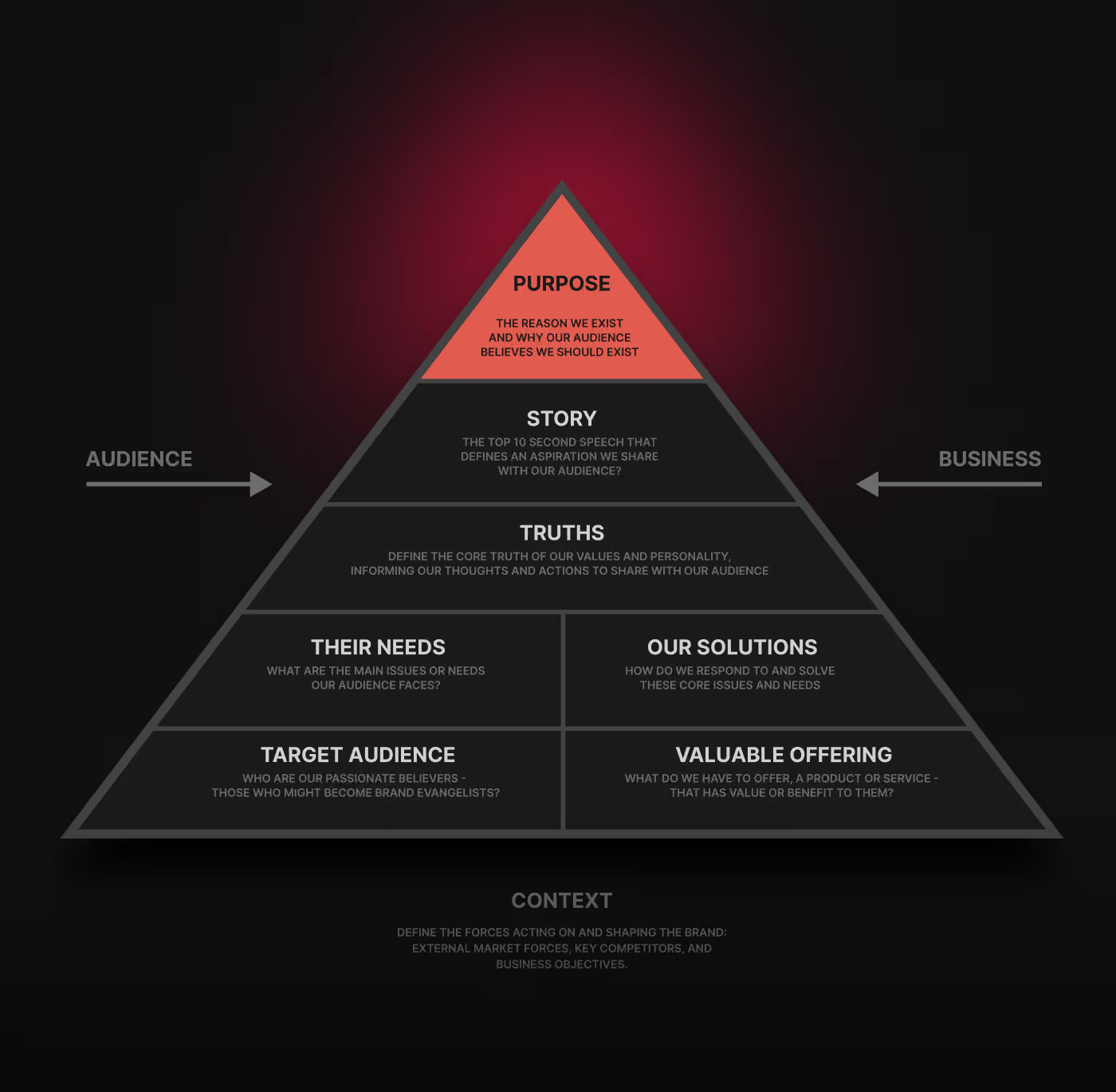
A structured framework that defines the brand’s role, priorities, and direction. Connects business goals with market context and audience perception.
Learn more
Close It
Brand Strategy

from 10 days
Brand strategy is needed when a project has to define where it is going and what will make it win. It becomes the working foundation for positioning, identity, product, marketing, sales, and communication.
We analyze the market, competitors, audience, product, business model, growth points, and constraints. We look at who already holds strong positions, where there is open space, what the audience chooses today and why, and which arguments can actually work.
The strategy defines the brand’s role in the market: who needs it, what problem it solves, how it differs, what value it promises, and what language it should use. We also define brand character, key messages, communication principles, and possible growth directions.
The result is not an abstract “big idea,” but a decision-making document: what to say on the website, how to structure a presentation, what the visual system should be built on, which meanings to strengthen in advertising, and how to explain the brand to clients, partners, and the team.
Talk to an Expert

Submit the Brief


from 12 days
Brand Platform & Positioning
A clear articulation of what the brand stands for — its values, character, promise, and point of difference. Forms the foundation for all communication.
Learn more
Close It
Brand Platform & Positioning

from 12 days
If strategy answers where the brand is going, the platform defines how it explains itself to the world.
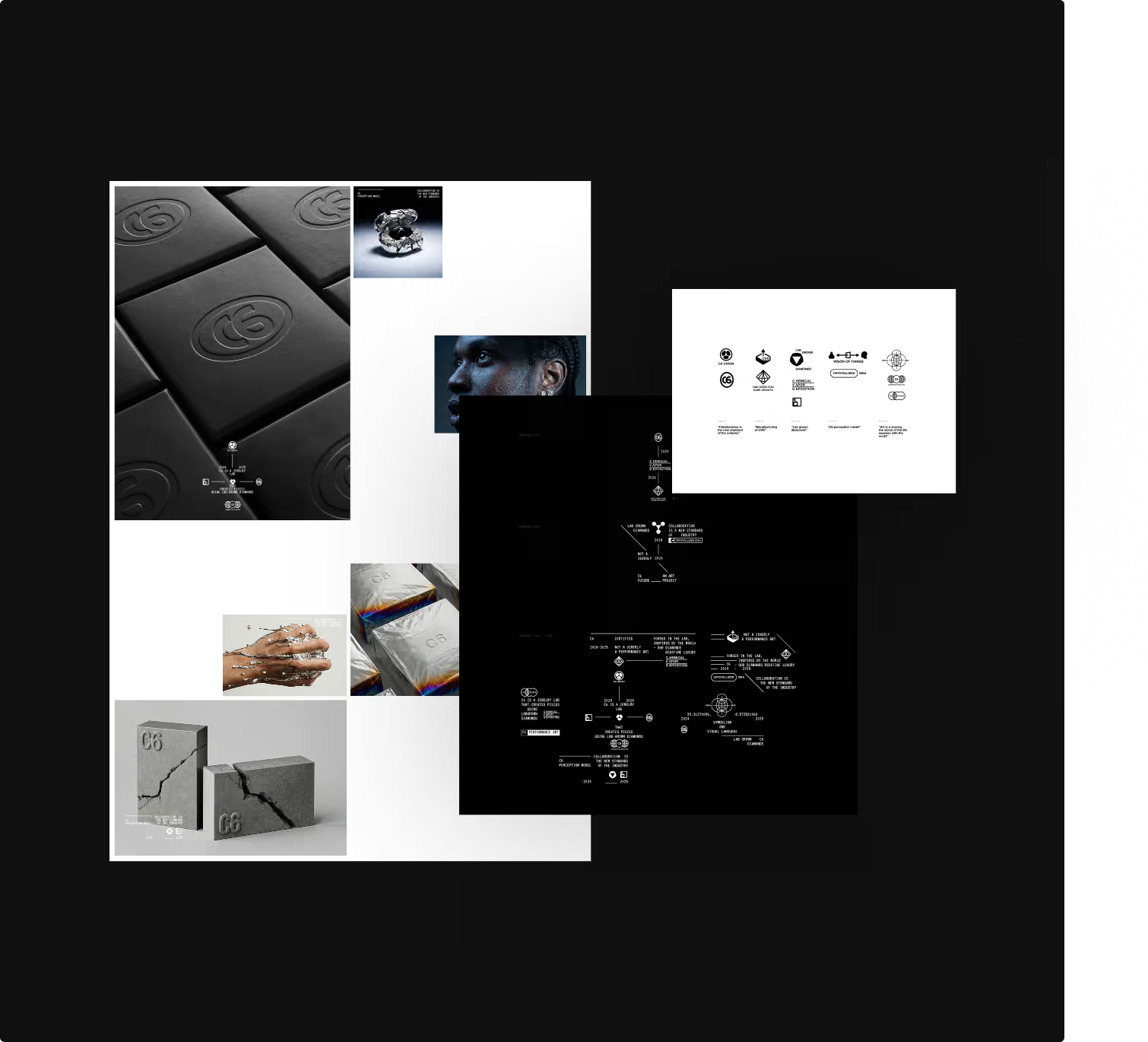
The brand’s meaning is articulated in precise terms — not as a vague feeling, but as a clear structure: who we are, who we’re for, why we exist, what value we provide, and how we should sound.Positioning defines the brand’s place in the audience’s mind. It clarifies how the brand differs from competitors, which argument should be understood first, and why it’s easier to choose this brand over others.
The platform brings together key elements: brand essence, promise, values, character, tone of voice, messages, and both emotional and rational drivers. These become the foundation for the website, presentations, advertising, identity, packaging, and sales.
Talk to an Expert
Submit the Brief


from 12 days
Creative Strategy
Principles and logic behind how the brand expresses itself. Covers tone, visual approach, and behavior across channels.
Learn more
Close It
Creative Strategy

from 12 days
Creative strategy translates brand meaning into clear communication principles. It defines how the brand turns into campaigns, content, advertising, presentations, and visual ideas — so it doesn’t sound different every time.
It determines which themes fit the brand, what type of creativity supports its character, how it captures attention, and where the line sits between “on-brand” and “beautiful but irrelevant.”
We define the brand’s creative behavior: tone, visual language, level of boldness, communication rhythm, formats, mechanics, and ideas that can evolve across channels. We also develop and curate special projects — from concept and format to collaborators, visual direction, and execution.
Talk to an Expert
Submit the Brief
from 7 days
Presentations & Infographics
Clarity-first visual communication. Complex ideas translated into structured layouts, strong hierarchy, and readable narratives.
Learn more
Close It
Presentations & Infographics

from 7 days
We work with structure, narrative logic, copy, visual hierarchy, charts, diagrams, infographics, and illustration. Complex information is turned into a clear story: what matters, in what order it should be shown, where emphasis is needed, and what should be removed.
We create investor pitches, commercial proposals, brand presentations, reports, research decks, internal documents, and strategic materials.
A presentation should not just place information on slides beautiful. Its purpose is to guide a person through an idea — quickly, clearly, and convincingly. Without overload or loss of attention. So the audience understands, remembers, and can make decisions.
Talk to an Expert
Submit the Brief


from 14 days
Financial Models
A practical view of the project’s economics — revenue streams, cost structure, and growth scenarios. Built to support decision-making.
Learn more
Close It
Financial Models

from 14 days
A financial model helps evaluate a project’s economics before significant time, money, or resources are committed. It shows where revenue comes from, where costs emerge, how profitability changes over time, and which conditions make the business sustainable.
We build models tailored to specific goals: product launches, new ventures, investment pitches, development projects, hospitality, e-commerce, services, or business expansion. Models include revenue streams, costs, margins, seasonality, growth scenarios, payback periods, and key risks.
The model helps identify which metrics truly matter, where the break-even point sits, how many sales are required, how resilient the business is, and which decisions have the greatest impact on outcomes.
Talk to an Expert
Submit the Brief
Localization
Adaptation for new markets with attention to language, cultural context, and user expectations. Maintains consistency while adjusting perception.
Learn more
Close It
Localization

Localization becomes essential when a brand enters a new country or communicates with audiences shaped by a different language and cultural context. Direct translation is not enough — the meaning, tone, and feeling of the brand must remain intact.
We adapt copy, naming, slogans, interfaces, packaging, and communication so they feel natural to the new audience without losing character. The process takes language, cultural codes, behavior patterns, sensitivity to wording, and visual perception into account.
Local experts — native speakers and market specialists — are involved throughout the process. This helps avoid inaccuracies, simplify adaptation, and make communication feel more organic.
The result is a brand that feels native to the new market: clear, relevant, and aligned with audience expectations.
Talk to an Expert
Submit the Brief