Success (´・ᴗ・ ` ) Request received
We’ll review your input and get back to you to align on the next step.
Back to Site
e-mail:
sales@moses.agency
Error. Couldn’t send.
Please check and try again. ~(>_<~)
Please check and try again. ~(>_<~)
Analyzing the exact details while tracking the massive shifts to bring you brutal market clarity that turns your data into an unfair advantage
We Map Markets Before Others Notice the Shift

Surveys
Interviews
Focus Groups
Qualitative Research
Quantitative Research
Desk Research
Questionnaires
In-depth Interviews
Mass Surveys
Insight Extraction
Decision-making
Start Your Project
Market Intelligence
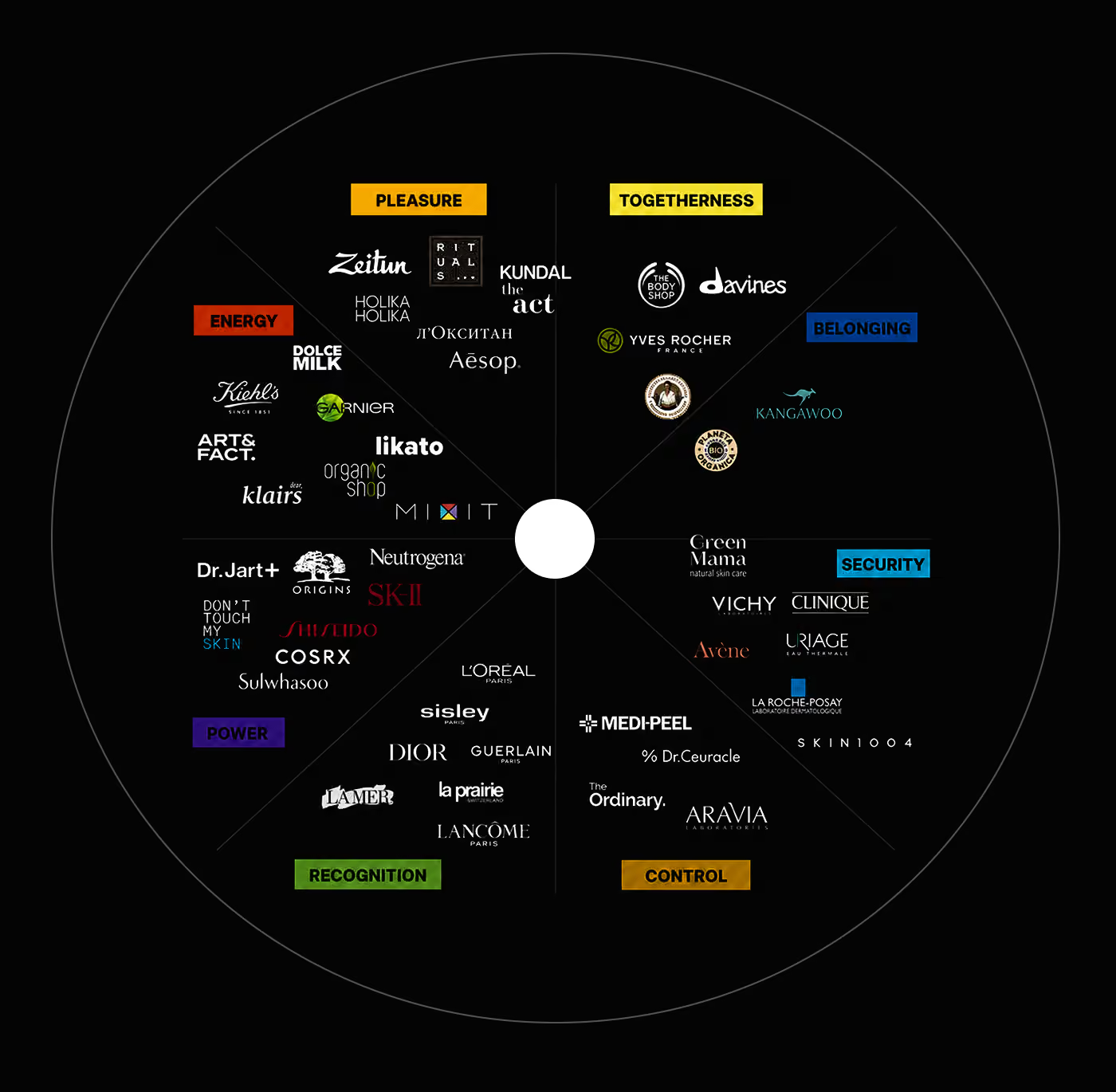
A Complete Map of Your Market Landscape
We analyze your market and competitors using quantitative, qualitative, and desk research. You get crystal-clear visibility, and every single insight is backed by linked, verified data.
Data-Driven Strategy
Strategy Built on Real Market Signals
No blind moves. We use raw analytics to tell you exactly what to do next, delivering frameworks that lead directly to your most visible market victories

Business Orientation
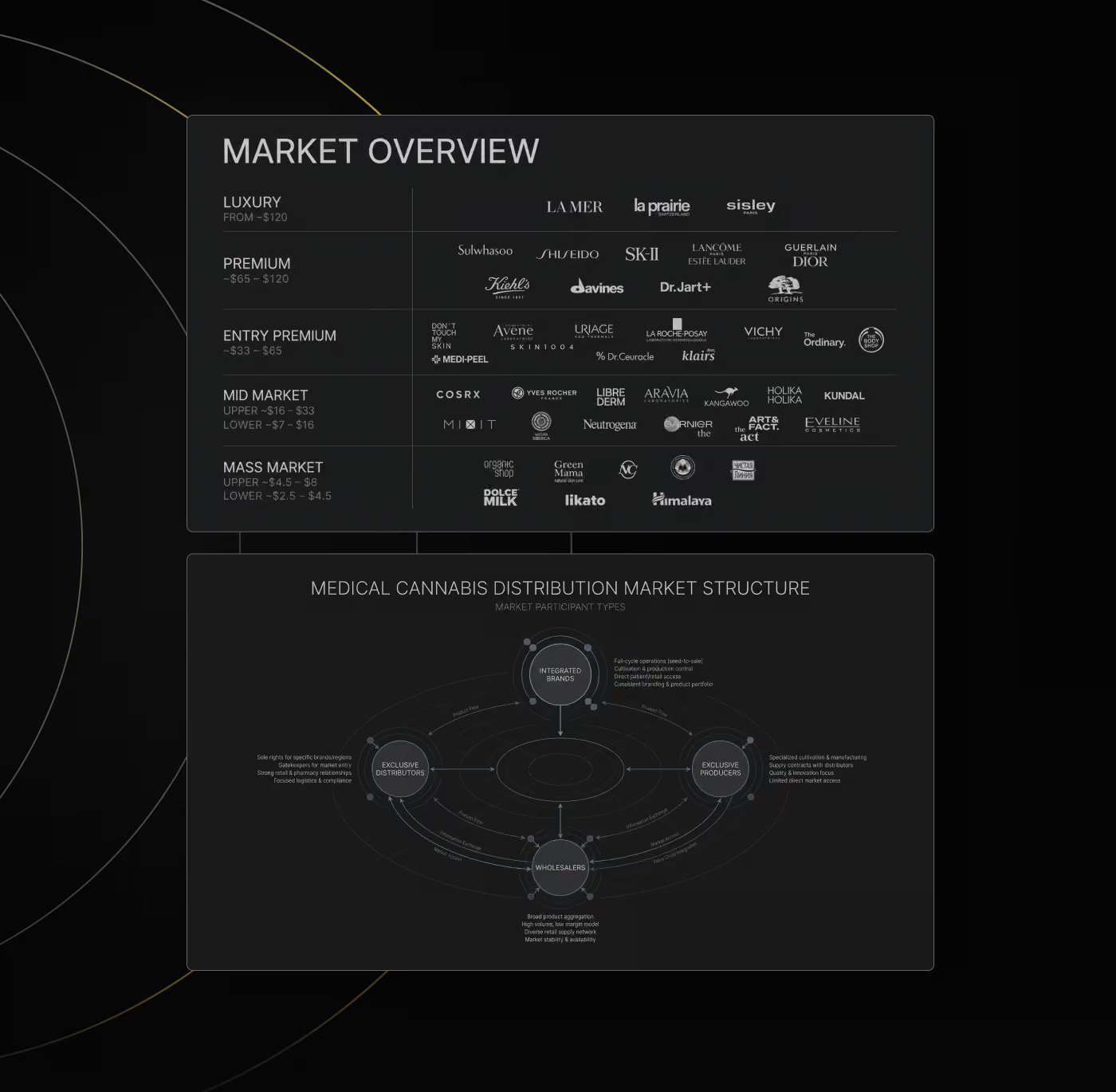
Insights That Shape Smarter Business Moves
We stress-test every assumption to uncover the exact intelligence needed to build your brand and product from the ground up
3 days
Brand & Communications Audit
A comprehensive assessment of the brand’s current state — positioning, visual system, tone of voice, and touchpoints. Highlights inconsistencies, gaps, and opportunities for improvement.
Learn more
Close It
Brand & Communications Audit

3 days
Over time, a brand can lose coherence: the visual identity drifts from strategy, the website fails to convey value, and communication across channels speaks in different voices.
An audit brings the full picture together and shows where the brand loses strength. We assess it from three angles at once — audience, market, and business: how clearly the offer is understood, whether it stands apart from competitors, how well the visual system works, how consistent the tone is, and how convincing the brand feels across website, social media, presentations, advertising, and other touchpoints.
The goal is not to find flaws for the sake of it, but to identify what can be strengthened. Sometimes a full rebuild is needed. Sometimes it’s enough to clarify the value, align assets, remove visual noise, or refine key materials.
The result is a clear view of the brand’s current state: what works, what weakens perception, where gaps appear — and which changes will have the strongest impact on perception, trust, and sales.
Talk to an Expert

Submit the Brief
from 7 days
Qualitative Research
When a product launches, a market shifts, or a brand needs to evolve. We don’t separate strategy from design — we build brands as complete systems that work in business, culture, and communication.
Learn more
Close It
Qualitative Research

from 7 days
Sometimes, to make the right decision or build compelling communication, it’s not about measuring averages — it’s about understanding how people actually think: how they choose, hesitate, compare, justify a purchase, and what they truly perceive in a brand.
We work with interviews, in-depth conversations, observations, focus groups, and analysis of open responses. Patterns emerge: fears, barriers, expectations, unmet needs, audience language, and real decision drivers.This is especially relevant when entering a new market, repositioning, launching a product, testing hypotheses, or when communication isn’t landing. We also handle complex products and conduct interviews with decision-makers in high-barrier industries.
The result is a clear picture of perception: how the audience sees the category, what’s missing, what builds trust, what repels — and which insights can anchor strategy, identity, product, and communication.
Talk to an Expert
Submit the Brief


from 7 days
Quantitative Research
Data-driven analysis of patterns at scale. Surveys, segmentation, and metrics used to validate hypotheses and measure market dynamics.
Learn more
Close It
Quantitative Research

from 7 days
When it’s not enough to hear individual opinions but necessary to understand scale — how many people think the same way, which patterns dominate, and which conclusions can be validated with data — we turn to quantitative research.
It’s especially useful before a product launch, rebranding, market entry, communication shift, or when testing multiple strategic directions. It helps separate intuition from verified data and reduces the risk of decisions based only on assumptions.We work with surveys, questionnaires, segmentation, statistics, user data, and market metrics. This allows us to test hypotheses, assess demand, compare audiences, identify priorities, and understand which factors truly drive decisions.
The result is a structured, data-backed view: how opinions are distributed, which segments are most перспективны, what builds trust, drives purchase or rejection, and which insights can inform strategy, product, brand, and communication.
Talk to an Expert
Submit the Brief